Common Study Abroad Mistakes (And How to Avoid Them)
Studying abroad is one of the biggest decisions a student will make — and one of the most exciting. But between choosing a country, shortlisting universities, taking English tests, writing SOPs, arranging finances, and preparing visa documents, there are plenty of opportunities for costly mistakes.
The good news? Most study abroad mistakes are preventable. This guide covers 13 of the most common mistakes students make — from applying too late and choosing courses for the wrong reasons, to underestimating living costs and overlooking visa requirements — along with practical, India-specific ways to avoid each one.
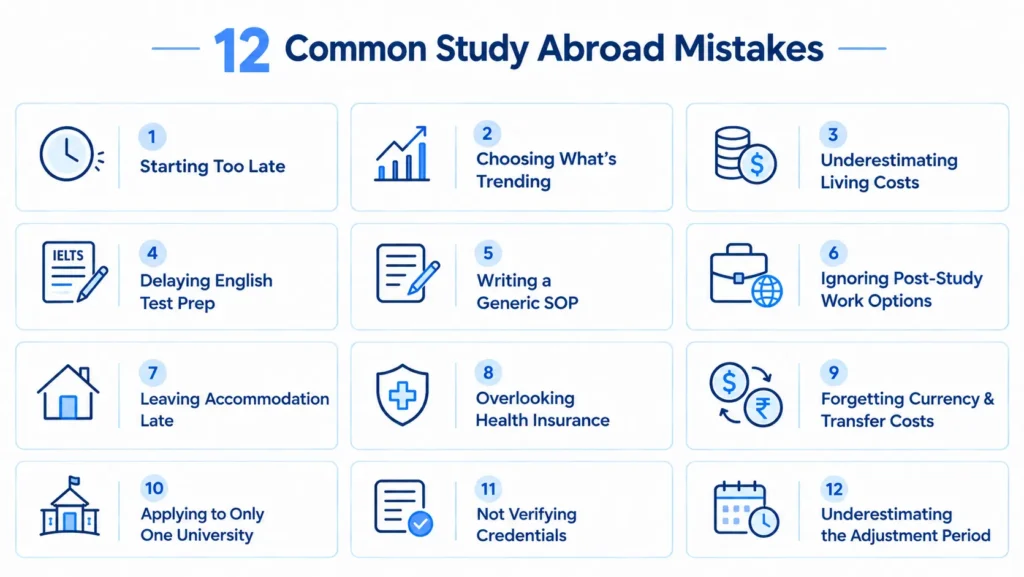
1. Starting the Process Too Late
Applications, entrance tests, document attestation, and visa processing all take time — often more than students expect. This is especially true once you factor in collecting documents like your passport, academic transcripts, provisional and final certificates, bank statements, loan sanction letters, and sponsorship affidavits where required. Popular intakes (especially September) have early deadlines, and scholarship or accommodation options dry up fast.
Fix it: Begin researching universities and courses at least 10–12 months before your intended intake, and start collecting your core documents early so you’re not scrambling once an offer comes in.
2. Choosing a Country or Course Because It's Trending
Picking a destination because a friend went there, or a course because it’s popular this year, often leads to mismatched expectations. What works for someone else’s budget, career goals, or academic background may not work for y ours.
Fix it: Base your choice on your career goals, budget, academic profile, and post-study plans — not on what’s currently popular. A country with slightly less buzz but better alignment with your goals will usually serve you better long-term
3. Not Checking Course Eligibility Carefully
Students sometimes shortlist a course based on its name or reputation without checking whether they actually meet its requirements — prerequisite subjects, minimum academic percentage, required work experience, portfolio submissions, mathematics prerequisites, or specific English test scores.
Fix it: Read the university’s official course page carefully before applying, and compare your academic background, test scores, and work experience against the published eligibility criteria. This saves you time and application fees on courses you may not actually qualify for.
4. Underestimating the Real Cost of Living
Tuition fees get most of the attention, but rent, groceries, transport, health insurance, and everyday expenses add up fast — and vary hugely by city. For Indian students, this also means accounting for your education loan sanction amount versus what’s actually disbursed at each stage, and any proof-of-funds requirements (such as a Guaranteed Investment Certificate for Canada) that some countries expect as part of the visa process.
Fix it: Research city-specific living costs (not just national averages) before finalizing a university, and map out your loan disbursement schedule against your actual fee and living cost deadlines.
5. Delaying English Proficiency Test Prep
IELTS, PTE, TOEFL, and Duolingo (where accepted) are often treated as a formality — until a student scores lower than expected and has to retake the test, pushing back the entire application timeline. Score requirements also vary by university and course, so a score that’s sufficient for one program may fall short for another.
Fix it: Take a diagnostic test early and check the specific score requirement for each university and course you’re applying to, rather than preparing for a general benchmark.
6. Writing a Generic Statement of Purpose (SOP)
Admissions officers read thousands of SOPs. A template-style SOP that could apply to any student, for any university, rarely stands out — and can hurt an otherwise strong application.
Fix it: Tailor your SOP to the specific university and course. Be specific about why that program, what you bring to it, and how it connects to your career plans. Avoid copying structures or phrases from “sample SOPs” found online.
7. Not Researching Post-Study Work Options
Post-study work rights differ significantly by country, and depend on factors like your degree level and the specific course you complete — these rules also change more often than students expect.
Fix it: Before applying, check the current post-study work policy for your target country directly through the relevant official immigration authority’s website, not through older blog posts or forum threads. Confirm whether your specific course and degree level qualify, and how long the post-study work permission lasts.
8. Leaving Accommodation Until the Last Minute
Good student accommodation — especially university halls and well-located private options — fills up quickly. Students who wait until after their visa is approved often end up with limited, more expensive, or poorly located choices.
Fix it: Start accommodation research as soon as you have an offer letter, even if the visa is still pending. Many universities open housing applications well before intake.
9. Overlooking Health Insurance Requirements
Health insurance requirements vary by country, visa type, and university — some destinations require specific student insurance arrangements, while others may include coverage through the university or a national health system.
Fix it: Confirm exactly what’s covered by your university and what you need to arrange separately, directly through your university’s official student services page, well before departure.
10. Not Budgeting for Currency Exchange and Transfer Costs
Exchange rate fluctuations and international transfer fees can add unexpected cost, especially when sending large sums for tuition and living expenses over an extended period. For Indian students, this also means factoring in remittance charges under the Liberalised Remittance Scheme (LRS) and comparing forex cards, bank transfers, and specialist remittance services.
Fix it: Build a currency fluctuation buffer into your budget, and compare transfer methods for fees and exchange rates rather than defaulting to whichever your bank offers first.
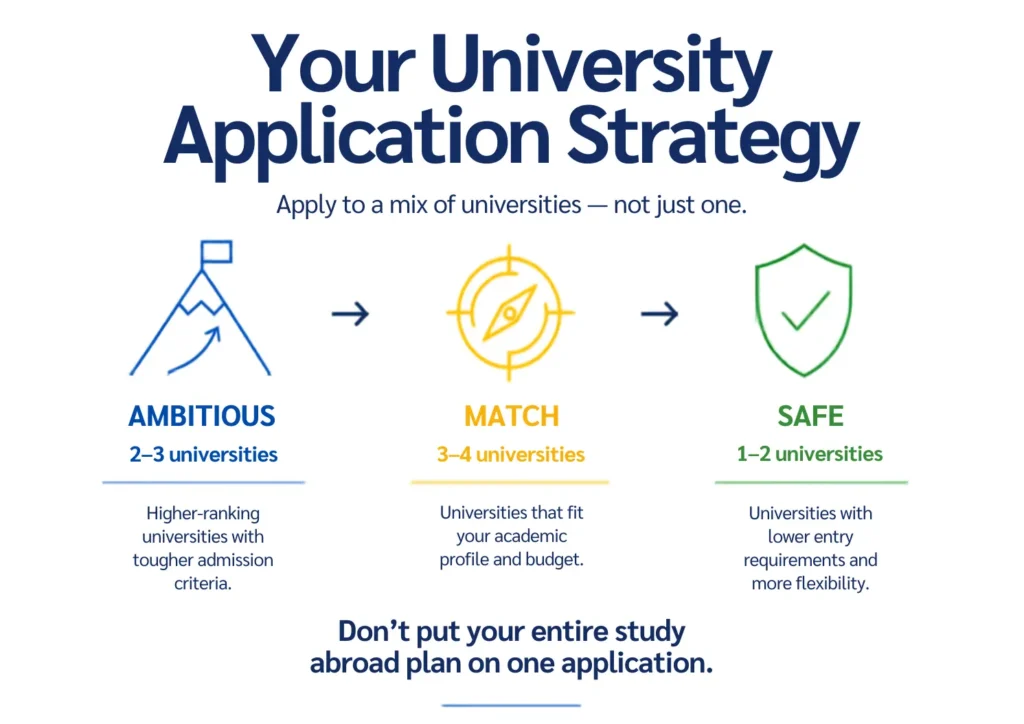
11. Applying to Only One University
Relying on a single application — even to a “safe” university — leaves no backup if that application is delayed, rejected, or the visa process hits a snag.
Fix it: Apply to a balanced mix of universities — a couple of ambitious choices, a few realistic matches, and at least one safe option. This also gives you leverage to compare offers and scholarships.
12. Not Verifying Institution and Consultant Credentials
Not every institution advertised online is properly accredited, and not every “study abroad consultant” is authorized or experienced. Working with the wrong one can mean wasted fees, poor advice, or application errors.
Fix it: Verify a university’s accreditation status directly through the relevant official accreditation or regulatory body, and check that any consultancy you work with is transparent about its credentials and affiliations.
13. Underestimating the Adjustment Period
Academic systems, teaching styles, grading, and everyday culture can differ substantially from what students are used to. Many students expect the hardest part to be getting admitted — not adjusting once they arrive.
Fix it: Talk to current students or alumni from your target university before you go. Go in expecting an adjustment period, and treat the first few months as a learning curve rather than a sign something’s wrong.
Final Thoughts
When should I start my study abroad application process?
Ideally 10–12 months before your intended intake, to allow time for tests, documentation, applications, and visa processing without rushed deadlines.
What are the most common study abroad mistakes?
Starting too late, choosing a course without checking eligibility, underestimating living costs, and submitting a generic SOP are among the most common — most stem from insufficient early research.
How many universities should I apply to?
A mix of ambitious, realistic, and safe options — typically 4-6 — protects against delays or rejections and gives you room to compare offers.
How much should I budget for studying abroad?
This varies significantly by country and city, and should include tuition, living costs, health insurance, and a buffer for currency fluctuation. Check current cost estimates for your specific destination and university rather than relying on general averages.
Can I apply to study abroad without IELTS?
Some universities accept alternative tests like PTE, TOEFL, or Duolingo, and a few offer exemptions based on your academic background. Check each university’s specific English proficiency requirements rather than assuming one 3 test is universally required.
How important is an SOP for university admission?
A well-written, specific SOP can meaningfully strengthen an application, especially for competitive courses. A generic or templated SOP can weaken an otherwise strong profile.
Should I choose a university based on rankings alone?
Rankings are a useful reference point, but course-specific reputation, career outcomes, and location often matter more for your particular goals than an overall institutional ranking.
How can Indian students specifically avoid study abroad mistakes?
Beyond the general steps above, pay close attention to loan disbursement timelines, proof-of-funds requirements, forex/remittance charges, and document attestation — these are common bottlenecks that can delay an otherwise strong application.